




Description
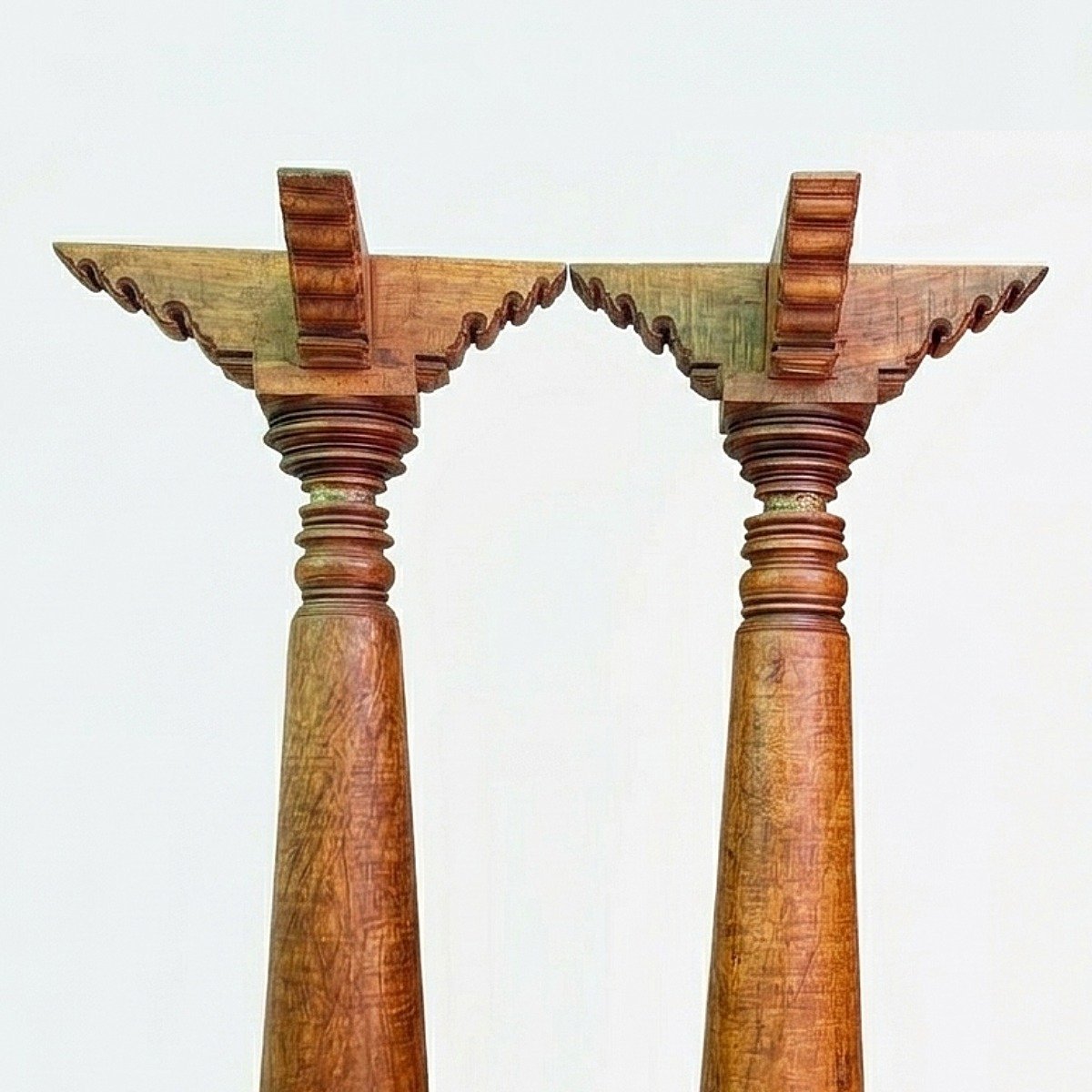
Chettinad columns are known for their intricate design, which often features serpentine carvings and decorative brass fittings.
Materials
Chettinad columns are often made from durable materials like satin wood or teakwood.
Base
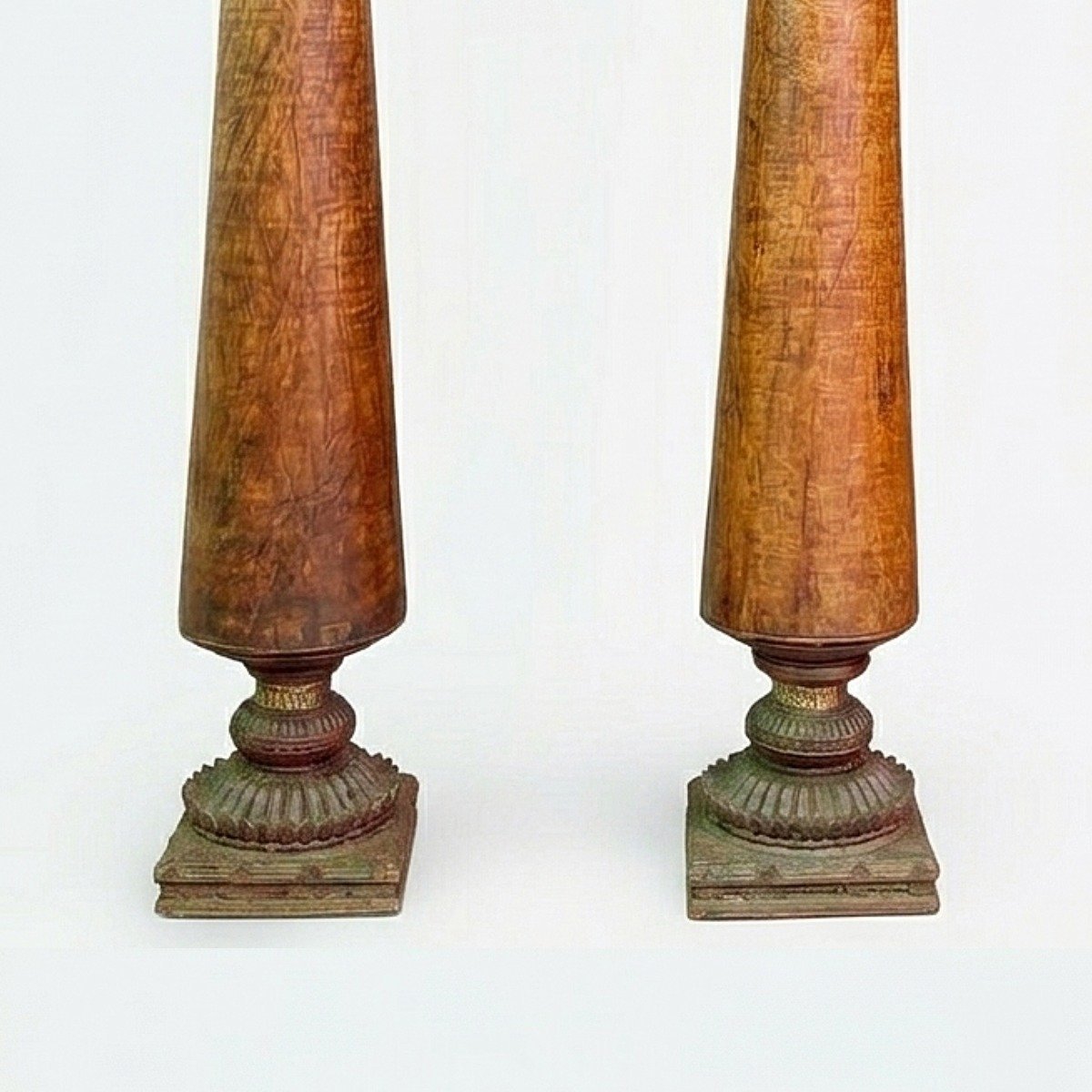
Chettinad columns often have a broader base that tapers towards the top. The base may also be made from granite and carved into lotus motifs.
Structural role
Chettinad columns played a vital structural role in Chettinad mansions, supporting the weight of the roofs and wooden beams. They were also resilient and flexible, which was an advantage in regions prone to earthquakes.
These monumental Chettinad pillars are quintessential architectural features of traditional haveli mansions in the Chettinadu region of Tamil Nadu, India. Crafted from durable satin wood with a subtle sheen, they embody grandeur, intricate design, and the use of high-quality materials characteristic of the Chettiar community’s cultural sophistication.
These pillars (columns) feature a broader base that tapers towards the top, designed to support the lofty ceilings typical of Chettinad mansions. The capitals are adorned with serpentine carvings that complement their tapering form, while below, decorative brass fittings add an elegant touch. The granite bases are meticulously carved into lotus motifs, symbolizing purity and enhancing the pillars’ aesthetic appeal.
Perfect for adding a historic and ornamental flair to any architectural or interior design project, these Chettinad columns are a testament to South Indian craftsmanship and heritage.
Beyond aesthetics, wooden pillars played a pivotal structural role. They bear the weight of massive wooden beams and roofs, distributing the load evenly and preventing the structure from collapsing. Their resilience and flexibility offered an added advantage, especially in regions prone to earthquakes, where they can absorb shock without crumbling like their stone counterparts.



Reviews
There are no reviews yet.